

Comic Book Pressing & Cleaning: Does It Boost CGC Grade & Market Value?
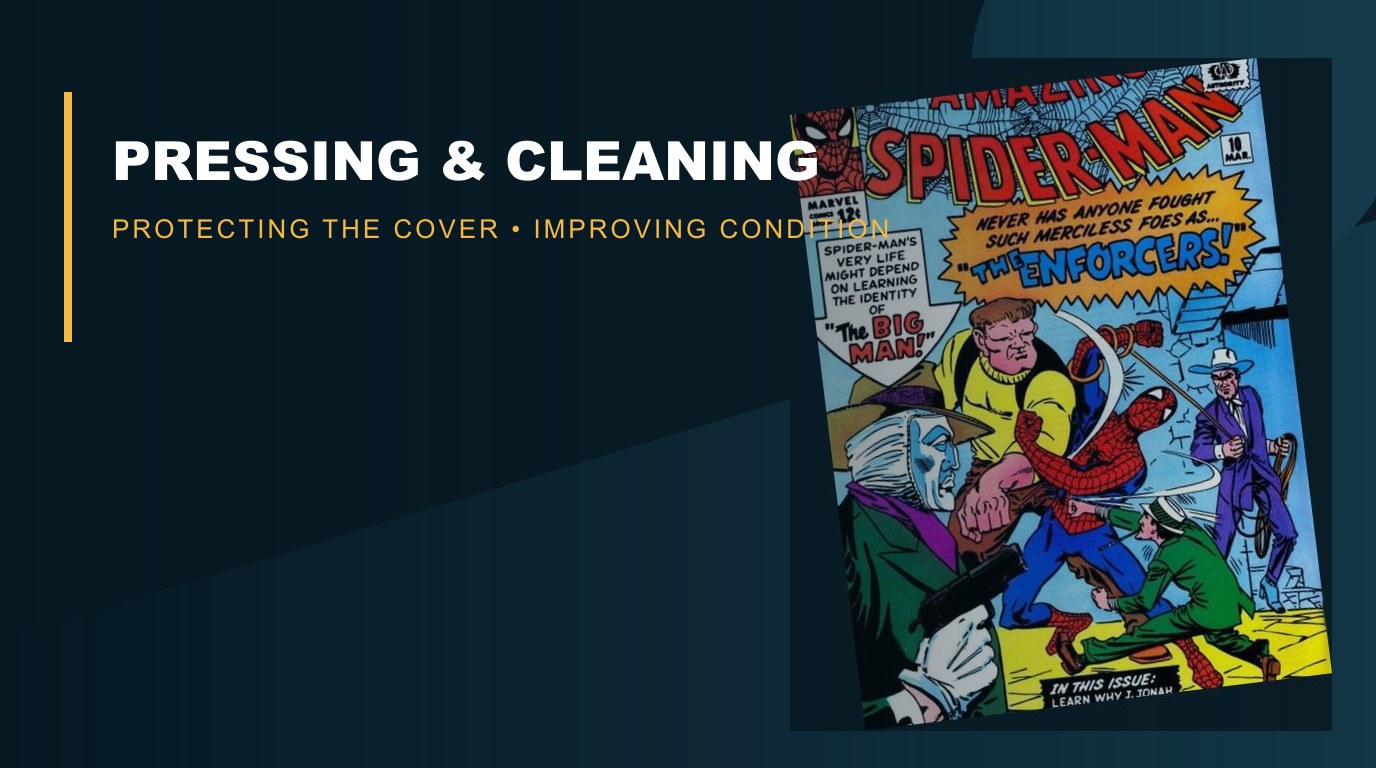
If you own high-value raw comics or plan to submit books to CGC or CBCS, you’ve likely heard collectors talk about pressing and cleaning. Promoted as the ultimate secret to unlocking higher numeric grades, professional dry pressing can turn a CGC 9.2 into a CGC 9.6 or 9.8—potentially adding hundreds or thousands of dollars to a comic’s resale value.
However, pressing isn’t magic. It cannot fix torn covers, faded ink, or severe paper restoration. If used on the wrong book, pressing can end up being a complete waste of money.
In this guide, we break down how comic book pressing and cleaning works, which defects can be fixed, how to calculate your Return on Investment (ROI), and whether you should press your comics before grading.
What Is Comic Book Pressing and Dry Cleaning?
Over decades of storage, comics absorb moisture, suffer from stacking weight, and accumulate surface grime. Pressing and cleaning reverse these physical stresses through two complementary processes:
1. Dry Cleaning (Surface Dirt Removal)
Before heat or pressure is applied to a comic, it must be dry cleaned. Using non-abrasive document cleaning pads, soft cosmetic sponges, and vinyl erasers, a presser gently removes:
- Surface dirt, dust, and longbox grime.
- Storage oils and fingerprint residue.
- Light pencil marks (such as old retail arrival dates on Golden/Silver Age books).
Important: Dry cleaning uses zero liquids, solvents, or chemicals. Solvent washing or chemical stain removal is considered restoration and will trigger a CGC Purple Label.
2. Dry Pressing (Heat, Humidity & Pressure)
After cleaning, the comic is placed inside a humidity chamber to relax the paper fibers slightly. It is then layered between specialized archival silicon release paper and steel plates inside a flat-bed heat press.
By applying precise heat (typically 140°F–165°F depending on paper age) and high pneumatic pressure, pressing flattens non-color-breaking defects without melting interior staples or damaging cover gloss.
Fixable vs. Unfixable Comic Book Defects
The single most important step in deciding whether to press a comic is identifying which physical defects can actually be corrected.
| Defect Type | Can Pressing & Cleaning Fix It? | Impact on CGC Grade |
|---|---|---|
| Light Spine Stress Marks (No ink break) | ✅ Yes | Bump from 9.2/9.4 to 9.6/9.8 |
| Surface Indentations & Finger Bends | ✅ Yes | Significant grade lift |
| Spine Roll & Cover Stacking Warps | ✅ Yes | Aligns spine cleanly |
| Surface Grime & Light Pencil Arrival Dates | ✅ Yes | Cleans cover eye appeal |
| Color-Breaking Creases | ❌ No (Paper stays flat, but white line remains) | Grade capped at 8.5–9.0 |
| Spine Splits & Cover Tears | ❌ No (Requires paper restoration) | Structural grade cap |
| Foxing, Water Stains & Mold | ❌ No (Chemical damage) | Stays permanently |
| Missing Cutouts & Stamps (Marvel Value Stamps) | ❌ No | Caps grade (or green label) |
The ROI Math: When Does Pressing Make Financial Sense?
Pressing costs money and adds time to your grading process. To determine if pressing is worth it, compare the cost of pressing + grading against the market value difference between grade tiers.
The Grade Gap Rule of Thumb
Pressing ROI Formula: Value at Higher Grade − Value at Current Grade > Pressing Fee + Grading Fee
Example Case Study: New Mutants #98 (1st Appearance of Deadpool)
Imagine you own a raw copy of New Mutants #98. Upon visual inspection with the ComicValue app, you notice minor surface denting and non-color-breaking spine ticks.
- Estimated Grade Unpressed: CGC 9.2 → Current Market Value: ~$350
- Estimated Grade Post-Press: CGC 9.6 or 9.8
- Current Market Value at CGC 9.6: ~$550
- Current Market Value at CGC 9.8: ~$1,400
Calculation:
-
Independent Pressing Fee: $20
-
CGC Modern Grading Fee: $25
-
Shipping & Handling Share: $15
-
Total Investment: $60
-
Scenario A (Lift to 9.6): Profit increase = $550 - $350 - $60 = +$140
-
Scenario B (Lift to 9.8): Profit increase = $1,400 - $350 - $60 = +$990
In this case, pressing New Mutants #98 is an obvious win. However, if you are pressing a $15 modern comic where a CGC 9.8 only sells for $45, the combined pressing and grading fees will exceed the total return.
Independent Pressers vs. CGC CCS In-House Pressing
When submitting comics for pressing, you have two primary choices:
1. CGC In-House Pressing (Classic Collectible Services - CCS)
- Pros: Seamless workflow; books transition directly from pressing to CGC grading tables without extra return shipping.
- Cons: Longer turnaround times (often adding 2–4 months to turnaround); higher tier pricing on valuable books; impersonal automated handling.
2. Independent Third-Party Pressers
- Pros: Faster turnaround times; personalized evaluation (they will tell you honest feedback if a book won’t benefit from pressing); flat-rate pricing regardless of high book values.
- Cons: Requires shipping books twice (once to presser, then to CGC).
Step-by-Step Pressing Strategy for Collectors
If you’re building a submission batch, follow this 4-step checklist:
- Scan and Appraise Raw Books: Use a digital cover scanner like ComicValue to quickly retrieve current raw sold prices vs. CGC 9.6/9.8 sold values.
- Inspect Under High-Intensity LED Light: Hold the comic at a 45-degree angle under daylight LED bulbs. Look for surface indentations, spine stress ticks, and dull gloss.
- Check for Ink Breaches: Run your thumbnail gently across bends. If white paper fiber shows through the ink, pressing will not hide the line.
- Calculate Total Costs: Reference our comprehensive breakdown on how much CGC grading costs and evaluate raw vs. slabbed ROI in our guide to CGC vs Raw Comics.
Summary: Should You Press Your Comics?
Dry pressing and cleaning are among the most cost-effective tools in modern comic collecting. When applied to high-value Silver, Bronze, or Modern key issues with non-color-breaking flaws, pressing frequently pays for itself many times over in grade bumps.
Before submitting your next batch, evaluate your raw issues carefully, check current market pricing benchmarks, and make informed choices to maximize your collection’s value.
Ready to check the current market value of your raw and graded key issues? Download ComicValue for free on iOS and Android to evaluate your collection today.
Frequently Asked Questions
What is comic book pressing and cleaning?
Comic book pressing uses controlled heat, moisture, and pressure to flatten non-color-breaking dimples, spine rolls, and bends. Dry cleaning uses specialized eraser compounds to remove surface dirt, grit, and pencil marks without chemicals.
Does CGC consider pressing and cleaning to be restoration?
No. CGC and CBCS consider dry pressing and dry cleaning to be conservation, not restoration. Books that undergo professional pressing receive standard Universal Blue Labels, not Purple Restoration Labels.
How much does comic book pressing cost?
Independent pressers charge between $12 and $35 per book depending on era and tier. CGC's in-house service (CCS) charges $15 to $150+ per book depending on the declared fair market value.
Can pressing fix color-breaking creases?
No. Pressing flattens paper, but it cannot restore missing ink or repair cracked paper fibers. If a crease has broken the ink on the cover, the white line will remain visible after pressing.
Explore Key Comic Price Guides
Action Comics #1 (1938)
Explore the issue and valuation context
Detective Comics #27 (1939)
Explore the issue and valuation context
Amazing Spider-Man #300 (1988)
Explore the issue and valuation context
Incredible Hulk #181 (1974)
Explore the issue and valuation context
Browse our master price guide directory for 250+ key issues.