

Comic Book Catalogue for Insurance: What to Record
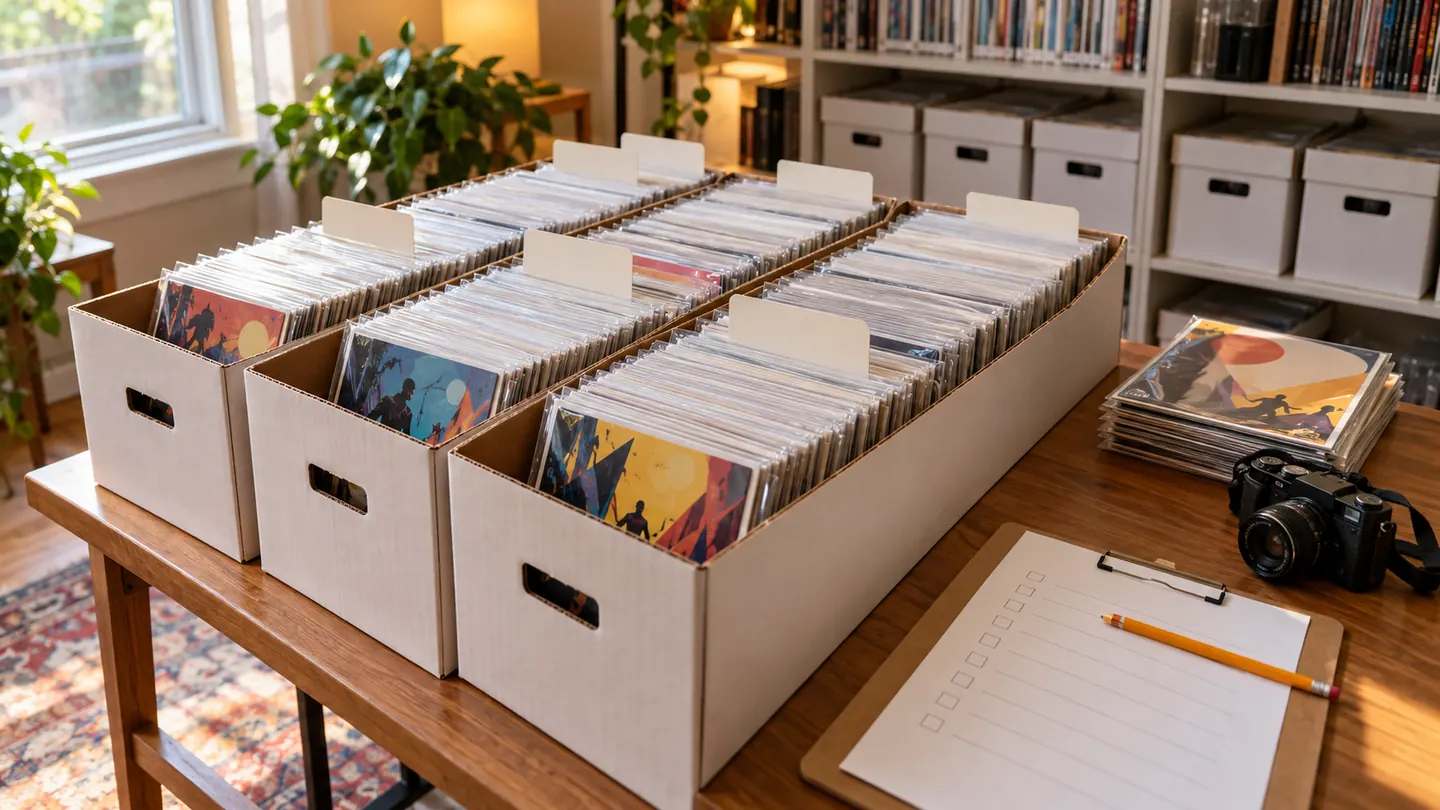
A comic catalogue helps document a loss; it does not create coverage. Build the inventory before a claim, photograph the books and storage, retain receipts or appraisals, and ask your insurer whether collectibles need a special limit, endorsement, or separate policy. The policy language and insurer’s instructions control.
The hero image is an AI-generated editorial illustration. It is conceptual and not an authentic insurance document, receipt, appraisal, or comic photograph.
What to record for each comic
| Field | Example of useful evidence | Why it helps |
|---|---|---|
| Identity | Title, issue, series year, publisher, cover date, indicia, edition or variant | Separates similarly titled issues and reprints. |
| Physical state | Front/back/spine/interior photos; defects; page quality; completeness | Shows what was present before a loss. |
| Certification | Grading company, grade, label category, certification number, label photo | Lets a reviewer match a slab to the recorded book. |
| Acquisition | Date, seller, receipt, invoice, auction lot, gift or inheritance note | Preserves provenance and cost evidence. |
| Current evidence | Dated comparable-sale notes or professional appraisal | Shows how a value estimate was formed without turning it into a guarantee. |
| Location | Room, shelf, safe, off-site storage, box identifier | Helps reconcile a claim with the collection. |
The National Association of Insurance Commissioners (NAIC) recommends inventorying valuable items including collectibles, keeping receipts, and storing the record somewhere separate from the home. Its consumer guidance also says an inventory should include vital information and photos. Read the NAIC claim guidance and homeowners guidance for the insurance context.
Photograph the collection like a record, not a product shoot
For a notable single issue, capture the front, back, spine, inside cover, indicia, certification label, and any defect or restoration note. Include a ruler or neutral reference only when it helps show scale, and keep the full-resolution originals. For a long run, photograph each box or shelf, then capture enough individual covers to reconcile issue numbers and counts.
Use stable filenames such as publisher-title-issue-edition-date-front.jpg. Keep a second copy outside the home or in a secure online location. The Insurance Information Institute recommends photos, receipts, appraisals, and an off-site copy; its home inventory guide also says collectibles may need special coverage.
Separate inventory from valuation and appraisal
An inventory answers: “What did I own, and what did it look like?” A valuation estimate answers: “What evidence supports a current range?” An appraisal is a formal opinion for a stated purpose, date, and scope. Do not label a scanner result or a marketplace asking price an appraisal.
For each valuable book, keep a dated evidence sheet:
- Identity and edition confirmation.
- Condition notes or certified label.
- Three or more comparable completed sales when available, with venue, date, currency, grade, and edition.
- Any appraisal report, receipt, or auction invoice.
- A note describing uncertainty, exclusions, and the date to review again.
This record can support a conversation with an insurer or appraiser, but it does not decide the policy’s settlement method. Replacement cost, actual cash value, agreed value, deductibles, exclusions, and special limits vary by contract. Ask in writing how comics and other collectibles are treated before relying on a general household limit.
Organize a collection without losing detail
Use one row per individually identifiable key or slab. Group common issues by title and run only when the group is countable and your insurer accepts grouped evidence. Track box number, issue range, quantity, and a photo of the box contents. Keep signed, restored, Qualified, Conserved, and high-grade certified books in separate groups because their evidence and description differ.
If books move, update the location and date. If a collection grows, add purchases while receipts are available. NAIC recommends reviewing the inventory annually and after new purchases. The Library of Congress comic-care guidance can help you choose supportive enclosures and avoid handling damage, but preservation advice is not an insurance promise.
Questions for your insurer or agent
- Are comics covered under the standard personal-property limit?
- Are collectibles subject to a sublimit, depreciation, or special endorsement?
- Is settlement based on actual cash value, replacement cost, or an agreed schedule?
- Is a professional appraisal required, and for which books?
- Are off-site storage, theft, flood, water, fire, and transit treated differently?
- What deductible and documentation apply to a partial or total loss?
- Should you provide a copy of the inventory now, or retain it until a claim?
Write down the answer, policy version, date, and the person you spoke with. A general web article cannot answer those contract questions for your policy or jurisdiction.
A small worked example
Suppose one box contains 40 ordinary issues and two individually identifiable graded keys. Record the box range and count, photograph the full box and representative covers, then create separate detailed rows for the two slabs with label photos and certification numbers. If an insurer requests an appraisal for the keys, the inventory makes the scope clear; it does not itself establish the appraisal amount or guarantee a claim payment.
For collection valuation methods, read how to find a comic book’s value, comic book appraisal guide, and CGC vs. raw comics. ComicValue on iOS and Android can help organize identity notes; it is not an insurer, appraiser, or coverage decision.
Frequently Asked Questions
What should a comic-book insurance inventory include?
Record title, issue, series year, edition, condition or certified grade, certification number, purchase or appraisal evidence, photos, storage location, and the date the record was updated. Keep receipts and appraisals with the inventory.
Does an inventory guarantee insurance coverage?
No. An inventory documents what you own and can support a claim, but coverage, limits, exclusions, deductibles, valuation method, and endorsements come from your policy and insurer.
Should every comic have its own entry?
High-value or individually identifiable books should have individual records. Common runs can be grouped when your insurer accepts that approach, with representative photos and a count that can be reconciled.
Explore Key Comic Price Guides
Action Comics #1 (1938)
Explore the issue and valuation context
Detective Comics #27 (1939)
Explore the issue and valuation context
Amazing Spider-Man #300 (1988)
Explore the issue and valuation context
Incredible Hulk #181 (1974)
Explore the issue and valuation context
Browse our master price guide directory for 250+ key issues.