

First Printing or Reprint? Identify Your Comic Book Edition
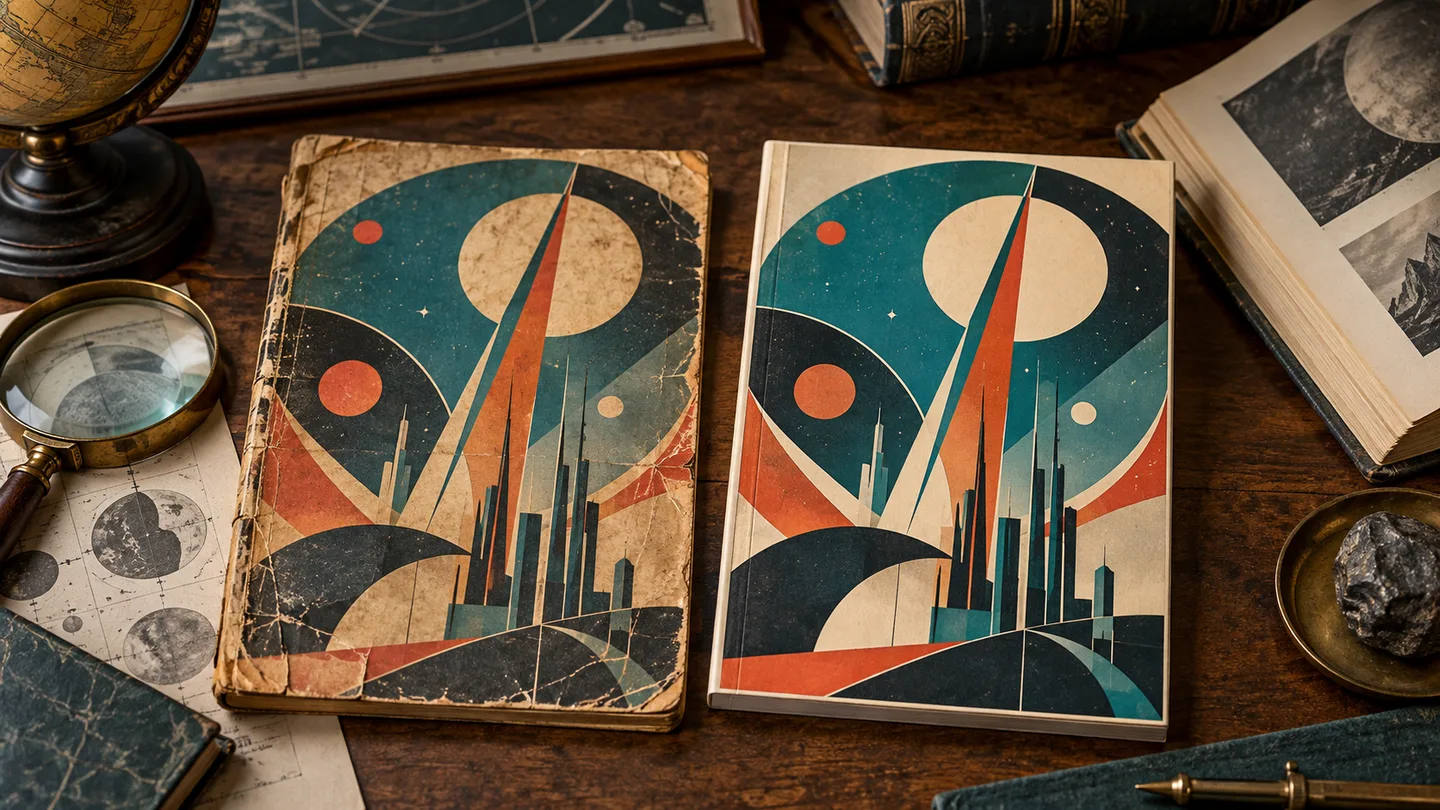
To tell whether a comic is a first printing or a reprint, start with its publication information and edition-specific evidence, not how old the cover looks. Record the series, issue, date and any printing statement, then corroborate them with a publisher listing or a reliable reference for that exact edition.
There is no single cover-price rule, paper-color test or barcode pattern that correctly identifies every comic. A modern reproduction can preserve old-looking artwork; an original can be unusually well preserved. The task is to establish what was published, not to guess how it should look.
This guide focuses on identifying the edition before looking up a price. A first printing is not automatically valuable, and a later printing is not automatically worthless.
Know which distinction you are trying to make
Several different products can reproduce the same story or familiar cover. Keep these categories separate in your notes:
| Term | What you are checking | Common research mistake |
|---|---|---|
| First printing | Whether this copy belongs to the initial printing of a specific issue and edition | Treating every issue numbered 1 as a first printing |
| Later printing | Whether the publisher printed the issue again | Assuming every later printing announces itself prominently on the front |
| Variant cover | Which cover version accompanies the issue | Assuming a different cover necessarily means a later printing |
| Facsimile edition | A separately issued reproduction designed to resemble an earlier comic | Using the reproduced cover date as the new edition’s release date |
| Collected edition | Whether the story appears in a book collecting other material | Pricing the collection as though it were the original single issue |
These categories can overlap: a later printing can have different cover art, and a facsimile can have multiple cover treatments. Use the publisher’s description for the particular publication instead of forcing it into a category from appearance alone.
Step 1: make an identity record before searching prices
Write down everything visible on the cover without interpreting it yet: title, issue number, printed price, date, publisher mark and cover credits if present. Photograph the front and back in good light. Avoid filters that alter color, because a small color difference may be relevant when comparing editions.
Add the language and any country-specific price or edition wording. A price printed in another currency can be a clue about the market or edition; it is not a stand-alone rarity or value assessment. A seller’s description is also a clue, not verification.
For an inherited collection, number the books or sleeves in your inventory rather than writing on the comics. Your photos, notes and eventual sold-price comparisons need to refer to the same physical copy.
Step 2: read the indicia and printing statement carefully
The indicia is the publication-information block inside the comic. It may be on an interior cover or another interior page, depending on the publication. Look for the legal title, issue or volume, publisher and publication information. Record any explicit “second printing,” reprint or facsimile wording exactly as it appears.
Do not assume that one copyright date dates the object in your hand. Copyright notices may describe material reproduced in a later publication. If a book displays an older story copyright and newer edition information, preserve both in your notes and find a reference that resolves them.
Absence of a printing statement is not proof of a first printing. Some editions require comparison with documented details specific to that title. Likewise, do not apply a book-publishing number-line rule to every comic without confirming that the publisher used it for that publication.
Handle the book conservatively. The Library of Congress recommends clean hands, a clean work area and avoiding folding covers back; see its comic preservation guidance. If the comic is brittle, stop before an identification exercise becomes a repair problem.
Step 3: check the edition against a primary reference
Use a search that includes the complete title, issue and suspected edition. A publisher’s catalog entry can establish that a facsimile or later publication exists, even when its artwork resembles an earlier issue.
For a concrete example, Marvel lists Amazing Spider-Man Facsimile Edition (2024) #254 as a facsimile that reproduces the original presentation, including advertisements. An old-looking advertisement therefore cannot, by itself, prove that a copy is an original printing.
That example is not a diagnosis of every copy carrying the same art. Match the publication details on your own book to the reference. Save the reference URL and the date you checked it. If a catalog image omits the area you need, find corroborating information rather than deciding that the missing detail must match.
When the publisher no longer supplies a useful listing, compare multiple documented references and mark the conclusion provisional. A marketplace listing that repeats another seller’s title is not independent confirmation.
Step 4: use barcode and cover-price clues in context
Barcodes, supplemental digits and logos can help distinguish certain editions when you have a documented reference for the same publisher and period. They are not a universal decoder covering all decades, countries and formats.
Do not use these shortcuts as final conclusions:
- “No barcode means it is rare.” Some editions were distributed without a conventional barcode; scarcity needs other evidence.
- “A lower cover price means it is the original.” Reproductions can retain historical design elements, and regional prices complicate comparison.
- “A different barcode means a different story.” It may distinguish an edition or cover rather than the interior story.
- “Yellow pages prove age.” Paper appearance is affected by materials and storage, and appearance alone does not establish a publication history.
The safer statement is narrower: “This barcode and price match the reference for this particular edition.” That is useful evidence; a rule about all comics is not.
A worked identification example
Suppose you have a comic with a famous cover and a low printed price. A cover search returns a valuable original issue. You also find a publisher catalog entry for a modern facsimile.
At this point, you have two candidates—not a verified valuable original. Examine the edition information inside your copy and compare it with the newer catalog entry. If the publication information identifies the facsimile, record that edition and research its own sales. Do not keep the original issue’s price simply because the front covers look close.
If the interior information is missing or unreadable, label the edition unresolved. For a purchase, ask for clear images of the relevant publication information before agreeing to a price. For a fragile book you already own, a knowledgeable dealer or specialist may be the appropriate next step.
This method also works in reverse. A scanner suggesting “reprint” is not decisive if the physical evidence points elsewhere. Resolve the disagreement with the book and documented references, not whichever answer produces the preferred value.
What identification changes about valuation
Once the edition is established, search sales for that version. Keep first printings, later printings, facsimiles and different cover variants in separate groups unless you have a specific reason to compare them—and explain that reason.
Condition and completeness remain independent questions. Confirming an original printing does not establish a high grade, and a later printing can still attract collectors. Our eBay sold-price guide explains how to choose comparable sales without mixing unlike copies. For the broader checklist, see how to tell if a comic is valuable.
For a box of mixed editions, the collection valuation guide helps organize unresolved copies without inflating the total. Put uncertain books into a research queue rather than assigning each the highest matching search result.
Keep this five-field verification note
Before attaching a price, complete: exact issue; edition/printing; supporting physical detail; reference URL; unresolved questions. If you cannot complete a field, the honest answer is “not yet verified.”
A mobile tool can help generate an identification lead while you work through the box. ComicValue is available for iOS and Android; check its current store listing before downloading. Use the physical edition details to check the result, as explained in our scanner accuracy guide.
Editorial note: published September 22, 2026. The original AI-generated hero uses fictional covers to illustrate comparison; it is not a visual authentication reference. Paper color in the illustration is not a test of age.
Explore Key Comic Price Guides
Action Comics #1 (1938)
Explore the issue and valuation context
Detective Comics #27 (1939)
Explore the issue and valuation context
Amazing Spider-Man #300 (1988)
Explore the issue and valuation context
Incredible Hulk #181 (1974)
Explore the issue and valuation context
Browse our master price guide directory for 250+ key issues.